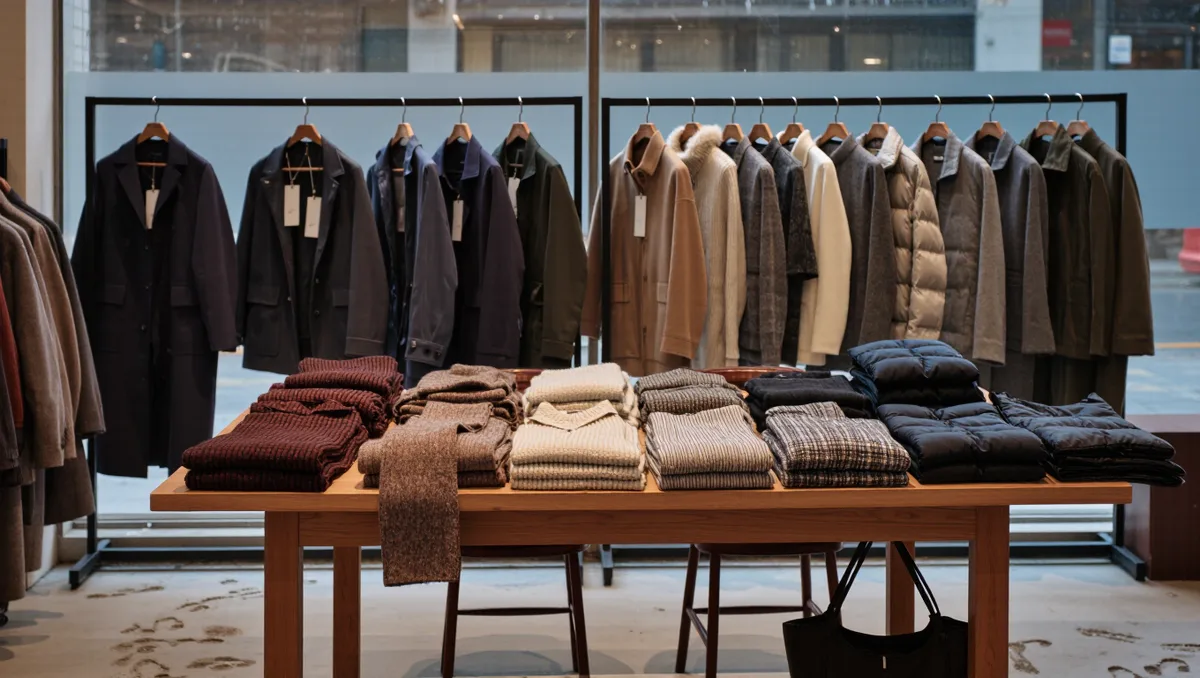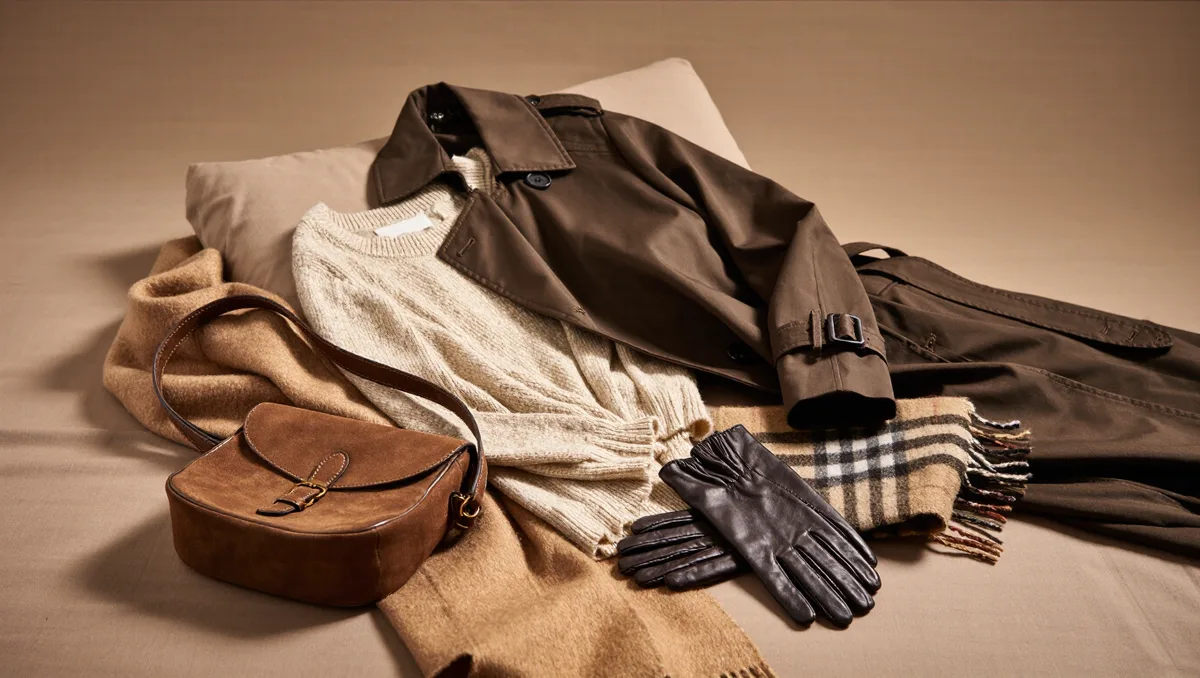
Fall layering outfits work when each layer earns its place: a thin base, a mid-weight middle, and one outer piece that carries the shape. The trick is trading thickness for texture. Thin fabrics stacked close to the body hold heat better than one puffy layer, and they keep the silhouette long instead of round.
The calendar gives the method a starting line. Autumn arrives in the Northern Hemisphere on Tuesday, September 22, 2026, at 8:04 P.M. EDT, according to The Old Farmer's Almanac, which also notes the old working definition of fall weather: nights that dip below freezing and days that stay under 70°F. That gap between a cold morning and a mild afternoon is exactly why layers beat one heavy coat. You add and shed all day.
What follows is a working guide: the three-layer formula, the textures that do the heavy lifting, and the proportion rules that keep the result looking deliberate.
What is the three-layer formula, exactly?
Think of it as base, middle, shell. The base sits against the skin and should be the thinnest thing you own that still feels good: a fine cotton tee, a ribbed long-sleeve, a thin merino crewneck. The middle is where warmth lives, and it can be slightly looser, a cardigan or a knit vest. The shell is the outer layer, and its job is shape, not insulation.
The common mistake is making the middle do the shell's job. A chunky sweater under a coat bulges at the arms and bunches at the waist. A mid-weight knit under the same coat lies flat and reads as one clean line. Save the chunky knits for days when the middle layer is the outermost layer, worn alone over the base.
One practical test before you leave the house: button or zip the shell over everything. If it closes without strain at the chest or hip, the proportions are right. If it pulls, swap the middle layer down a weight, not the shell up a size.
How do textures make thin layers look expensive?
Texture is the difference between layered and lumpy. When every layer is the same fabric, the eye reads one flat mass. When the fabrics differ, each layer stays visible even when they're all thin. Ribbed cotton under smooth denim under a brushed wool coat: three layers, three surfaces, no bulk.
The pairing logic is simple. Put a rough texture next to a smooth one. A fine-gauge knit under a crisp shirt. A silk-look slip under a chunky cardigan. Sheer fabrics do this work especially well, and the fall runways have pushed the idea hard — our Sheer Layering Takes Command: What Fall 2026 Runways Revealed report tracks how transparency moved from a summer device to a cold-weather one, worn over opaque bases for warmth.
Color plays a supporting role. Tonal dressing, where the layers sit within one color family in slightly different shades, visually merges the layers into a single column. That makes even four thin layers read as one garment. Our Monochrome Dressing Guide: How One Color Becomes a Whole Look breaks down that effect in detail.
Which layers add warmth without width?
Some pieces pull their weight better than others. The short list:
- Vests. A knit or quilted vest warms the core while leaving the arms free, which keeps the profile narrow.
- Thin merino or fine-gauge knits. Warm for their weight, and flat enough to disappear under a shirt or jacket.
- Long coats with room cut through the body. A coat sized to close over a mid-layer, not squeezed over one, keeps the line straight. Our Coat Silhouettes Explained: From Column to Puffer and Which Suits You guide maps which shapes do this best.
- Scarves. The cheapest way to add a warm layer exactly where you feel the cold. A big scarf over a thin coat often reads better than a heavy coat, and the Scarf Styling Guide: Nine Ways One Rectangle Rewrites an Outfit covers the folds that work.
The pieces to be honest about: anything quilted and short. Cropped puffers are charming, but over more than one layer they shorten the body and widen the midsection. If you love one, wear it over a single thin base and let the coat do the cold days.
What does a full layered outfit look like in practice?
Here is the formula assembled. Base: a white shirt, worn buttoned or open over a tee — the White Shirt Styling Guide: Ten Ways to Wear the Wardrobe's Hardest Classic has the variations. Middle: a fine knit or a vest. Shell: a blazer for mild days or a long coat once the frost arrives; the Perfect Blazer: A Fitting Guide to Shoulders, Sleeves and Everything After explains why shoulder fit matters more when you're layering under it. For related coverage, see White Shirt Styling Guide: Ten Ways to Wear the Wardrobe's Hardest Classic.
The color can be quietly bold. Merriam-Webster's usage examples, which compile current published prose, include a Travel + Leisure suggestion to pair a wine red rugby shirt with ivory corduroys to channel fall's cozy aesthetic — a good demonstration of one saturated layer doing the work while the rest stay neutral. One loud layer, quiet everything else. That's the whole trick.
Accessories follow the same rule. Fewer, larger pieces keep a layered look from turning busy, which is the argument of our Minimal Accessories: Fewer Pieces, Louder Effect — A Working Guide.
How do you keep layers looking intentional all day?
Three habits separate the deliberate from the accidental. First, plan your removal. If the afternoon warms up, the layer you shed should look complete on its own — a shirt over a tee, not a vest with nothing under it. Second, mind the hems. Varying lengths create the long vertical line that makes layers look styled: longest at the shell, shortest at the base, each visible at the hem.
Third, edit before you add. Every layer should have a job: warmth, texture, or shape. If a piece does none of those, it's adding bulk for nothing. The one-in-one-out discipline is the same one behind a tight capsule wardrobe — our Capsule Wardrobe Guide: Building One Weekend That Lasts for Years shows how a small set of compatible layers removes the morning guesswork entirely.
Practical steps: the layered fall kit
Our analysis, reading the method end to end: you need fewer pieces than you think. A workable kit is one thin base in a neutral, one mid-weight knit, one shirt for texture, one vest or cardigan, one long coat, and one scarf. Every piece pairs with every other, which turns six items into a dozen outfits. Start the kit when the equinox does, and let the layers thicken as the days shorten. Warmth, it turns out, is a styling decision before it's a shopping one. We covered a connected angle in Scarf Styling Guide: Nine Ways One Rectangle Rewrites an Outfit.